On a Saturday afternoon, I said goodbye to two friends. I walked them to the station in Pisa to catch their train. It was a bright, cold day; the low sun painted the walls of the buildings in shades of yellow. Before heading home, I crossed the bridges over the Arno a few times, until finally, I decided to make my way toward Piazza dei Miracoli.
A few weeks earlier, at my photography association, we had discussed some exercises to work on individually—projects to later compare and discuss together on a specific day. The latest challenge proposed in December was: ‘A photo in the style of Martin Parr.’
There I was in Pisa, one of the cities where Martin took one of his most iconic photographs. This is the photograph I am referring to:
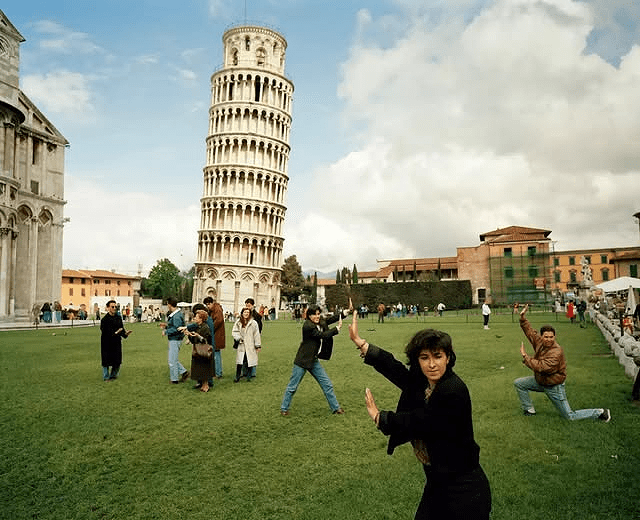
So I found myself asking: ‘If I were Martin Parr and I wanted to capture Piazza dei Miracoli today, what would that photo look like?’
Once I arrived at Piazza dei Miracoli, I began searching for the right perspective. I needed to capture a frame that brought the unbridled tourism to the forefront, set against the backdrop of those grand monuments. I will share the results with you now, so that we can compare them afterward.
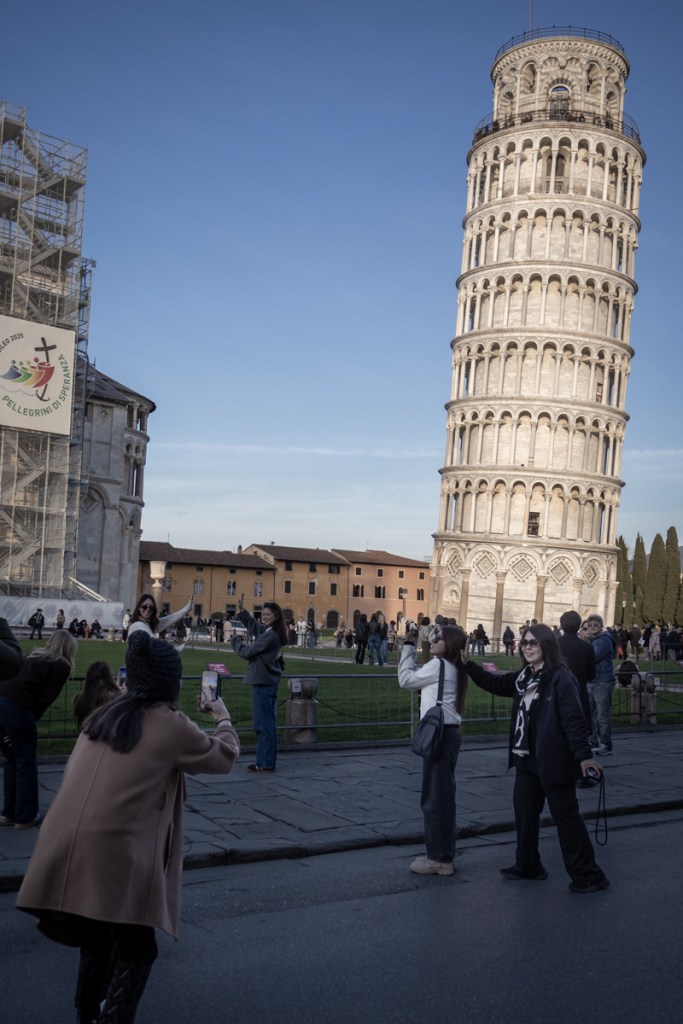
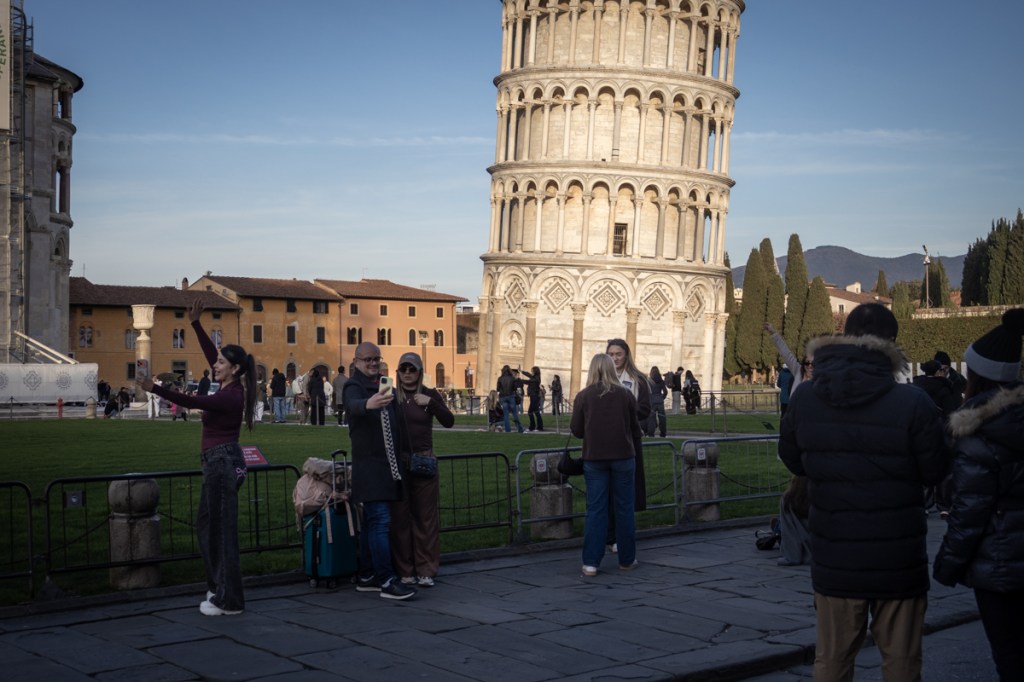
[To ensure a smoother reading experience, I have resized my shots; however, you can click on them to view the images as they were meant to be seen.]
Returning to the photos and the comparison with the unattainable Martin, the first thing that stands out is the color: while he likely took his photo during peak hours in broad daylight, I took mine in the late afternoon, around 4:30 p.m. As a result, my tourists were cast in shadow, while his were brightly lit.
Even if it isn’t obvious from the previews, the format is also different: in particular, my photo showing the Leaning Tower in its entirety is a vertical composition, whereas Martin’s photograph uses a horizontal frame.
Back in 1990, it was still possible to walk on the grass in front of the monuments, which allowed for a much more random arrangement of people. Today, since access to the lawn is restricted, tourists gather along the paths and the street, maintaining a certain unintended order. Fortunately, this didn’t stop people from posing; in fact, the three photographs reveal a clear shift in time: in my shots, people are using smartphones to take the famous self-portraits we now call selfies.
In short, there are so many observations one could make when comparing photographs taken in different historical periods (in our case, thirty years apart and across two different centuries!). This entire process helped me reflect not only on the evolution of the individual as a tourist but also on my own photographic taste. Completing this exercise confirmed that I do not enjoy photographing places disturbed by human presence.
I would like to clarify that this comparison with a master of photography was born from the requirements of the assignment, and not because I feel I am on the same level as someone who has shaped the history of photography.
Thank you for making it this far. You can find these photographs, along with others I took that same day—more in line with my personal style—over in Fragments.
 Return to Cozy Island
Leave a comment